General Anaesthesia
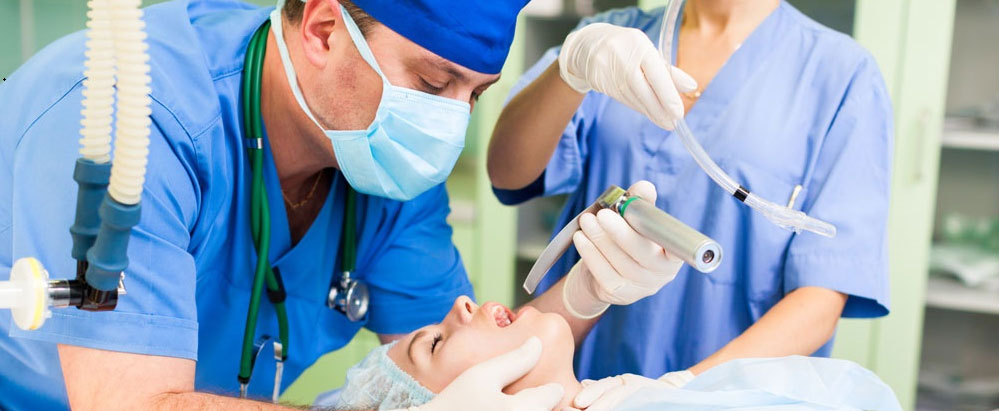
General anaesthesia is a medically induced sleep and loss of reflexes as a result of one or more general anaesthetic drugs. The overall result is ensuring amnesia, analgesia, relaxation of skeletal muscles, and loss of control of reflexes of the autonomic nervous system. You don’t want to be ‘twitching’ or moving at all when a surgeon is operating on you!
All CosMediTour Breast Augmentation procedures in Australia and Thailand are performed under General Anaesthesia at a fully accredited hospital with a Specialist Anaesthetist in attendance with the patient breathing through an Anaesthetic Ventilator. The anaesthetic drugs are administered directly through this ventilator.
Twilight Sedation or Conscious Sedation
Twilight Sedation, otherwise know as Conscious Sedation, is a technique where a small dose of general anaesthesia is applied to induce anxiolysis (anxiety relief), hypnosis, and anterograde amnesia (inability to form new memories). The patient is not unconscious but sedated. During surgery, the patient is under what is known as a ‘twilight state’, where the patient is relaxed and ‘sleepy’, but able to follow simple directions by the doctor, and is responsive.
Most Clinics that offer Breast Augmentations only under Twilight Sedation do so because their operating rooms do not meet the standards required of a Private or Public Hospital, and as such the facility is ONLY accredited to offer ‘Conscious Sedation’ ie. ‘Twilight Sedation’. These facilities can be converted offices with one or more operating theatres. This means these facilities are not licensed to put patients into a deeper sedation termed ‘Unconscious Sedation’ or ‘Deep Sedation’ which is in effect General Anaesthesia.
Dangers & Risks Associated with Twilight or Conscious Sedation in a Clinic
The primary and potentially fatal risk associated with Twilight Sedation is local anaesthesia toxicity (typically Lidocaine toxicity) due to a patient’s adverse reaction to excess local anaesthesia. This can result in cardiac arrest which requires emergency medical intervention and transfer to the Intensive Care Unit (ICU) of a registered hospital. This can happen when higher doses of local anaesthesia are administered to put the patient into an Unconscious Sedation or Deep Sedation state – even when the facility is only licensed to offer Conscious or Twilight Sedation.
Other significant risks associated with Twilight or Conscious Sedation WITHOUT an Anaesthetic Ventilator available is where the patient may encounter any breathing difficulty and associated complications due to reactions to the anaesthetic, antibiotics and the surgery itself. In such cases only a manually operated ‘bag and pump’ will be available for emergency airways breathing intervention then the client will be transferred to the Emergency Department or ICU at the nearest Hospital.
Only a Private or Public Hospital accredited by ACHS (Australian Council on Healthcare Standards) will offer this equipment in Australia. Every CosMediTour breast augmentation procedure in Australia as well as Thailand is conducted in an accredited Hospital and performed under full General Anaesthesia.
Further Reading:
- Why it’s Safer to Undergo Plastic Surgery in a Hospital Rather Than a Cosmetic Surgery Clinic
- Myths about Plastic Surgery in Thailand
- Plastic Surgeons vs. Cosmetic Surgeons
- Is Thailand Safe for Cosmetic Surgery?
Disclaimer: Please note any information provided should be used only as an information guide and not CosMediTour giving advice. Please ensure you do your own valid surgery research and seek advice from a general practitioner to enable you to be fully informed about surgery.